 Reviews


Why Ants Keep Appearing in Kitchens During Utah Winters
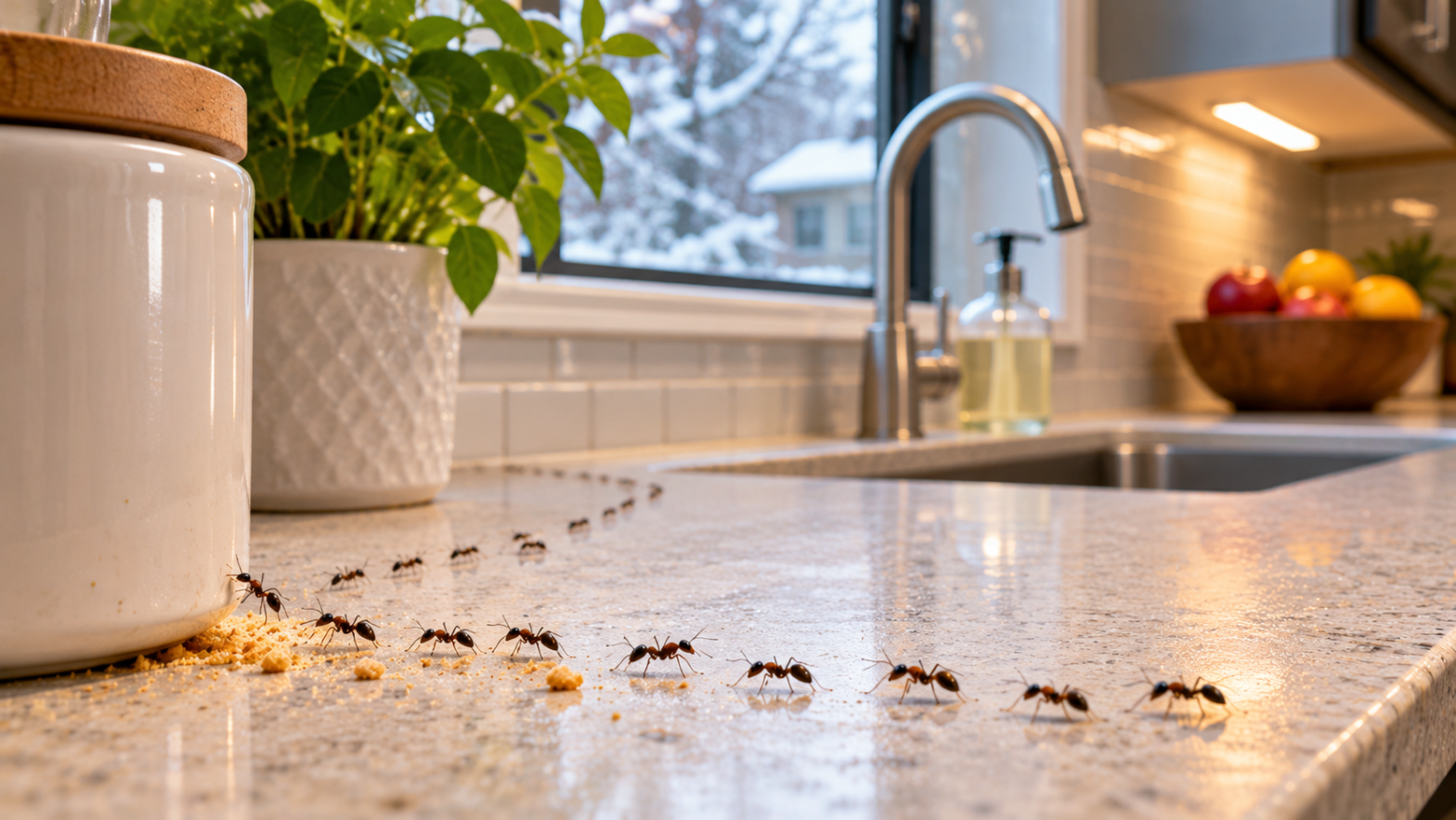
Utah’s winter temperatures can make an ant trail across the kitchen counter seem surprising. The backyard may be frozen, yet a handful of workers appear near the sink each morning. Cold weather generally slows outdoor activity for many ants, but it does not automatically remove colonies that have access to protected soil, wall spaces, or heated rooms.
For households dealing with repeated sightings, the important question is not simply why ants are indoors. It is what resources they have found and where the workers are coming from. Our technicians examine the species, trail patterns, and nearby conditions before recommending treatment. That evidence helps distinguish occasional visitors from an infestation that requires broader attention. This distinction is especially valuable when ants repeatedly appear despite changes in outdoor temperatures and household routines.
A Heated Kitchen Can Keep Ant Resources Available
Ants forage when conditions allow, and indoor environments can differ considerably from freezing outdoor air. A warm utility chase or protected nest close to the foundation may support activity when exposed ground is cold. Kitchen food and moisture can provide incentives for workers to continue visiting.
Several conditions deserve examination:
- Countertop residue: Small sugary spills or grease deposits may attract workers even after routine cleaning.
- Sink moisture: Condensation and plumbing drips can provide water in an otherwise dry winter home.
- Appliance gaps: Warm spaces behind refrigerators and dishwashers may conceal movement along walls.
- Pantry storage: Accessible packages and crumbs near shelving can support repeated foraging.
- Plumbing penetrations: Openings beneath cabinets may connect concealed routes with feeding areas.
Not every winter ant sighting indicates a colony living in the house. Workers may originate from protected exterior locations or established interior nesting sites, depending on the species and construction. An inspection considers which explanation fits the available evidence.
Our article on kitchen ant attractants describes how food, moisture, and established routes can bring ants to the same countertops repeatedly. Although that guide discusses spring, the underlying resources may still be available indoors during winter.
Reappearing Trails Often Point Beyond Visible Workers
Wiping away a trail may temporarily make the kitchen look clear, but it does not identify the nest or explain why workers chose that path. Ants use chemical signals to coordinate foraging, and a dependable resource can encourage additional visits. Weather changes may alter their movement without eliminating the underlying problem.
During professional evaluation, we look for:
- Trail direction: Repeated movement toward a wall gap may reveal a consistent access route.
- Ant identification: Species differences influence nesting behavior and suitable treatment methods.
- Multiple activity areas: Sightings around a sink and adjoining pantry may reflect connected routes.
- Moisture conditions: Damp cabinet corners can help explain why foraging remains concentrated.
- Seasonal history: Earlier sightings help show whether activity is recurring or newly established.
Treatment is selected according to the evidence. For some ants, properly chosen and positioned baits can help target the colony; other situations call for different targeted measures. Applying the same product in every kitchen is not a substitute for identifying the insects and their likely nesting locations.
Care around food preparation surfaces is essential. Our technicians consider household occupants, pets, and label requirements when selecting treatment locations. We also distinguish infestation management from plumbing or building repairs, which may need separate attention.
A single quiet day after treatment is encouraging, but follow-up observations are more useful for confirming whether trails are declining or moving elsewhere.
Winter Prevention Requires Attention Inside and Outside
Even when snow or frozen ground reduces outdoor foraging, a home can maintain conditions that appeal to ants. Effective prevention focuses on the relationship between food access, moisture, structural routes, and recurring activity rather than on temperature alone.
A seasonal inspection may address:
- Cabinet and sink areas: Checking for activity, persistent moisture, and concealed access points.
- Entry transitions: Reviewing gaps around doors, utility lines, and foundation connections.
- Exterior surroundings: Assessing sheltered landscaping or protected edges when accessible.
- Treatment results: Comparing fresh evidence with earlier findings before adjusting service.
- Maintenance priorities: Recommending appropriate moisture correction or structural sealing where needed.
Our guide to preventing ant invasions explains how evaluating food sources and hidden routes supports lasting management. Those inspection principles remain useful even as the season and foraging patterns change.
Winter sightings should not be treated as proof that the weather is forcing every ant indoors. Some species may already have stable nesting conditions close to a house. Accurate identification and careful monitoring help explain why ants return and what actions are justified.
The aim is to reduce active trails and their supporting conditions without assuming every kitchen needs repeated applications. When technicians can connect sightings to the colony and its resources, homeowners gain a clearer plan for managing activity through the colder months and beyond.
Find the Reason Behind Returning Kitchen Ants
If ants continue appearing in your Utah kitchen, contact EcoLine Pest Control for a professional assessment. Our team can identify the activity, investigate access routes, and recommend a targeted treatment and monitoring plan.
